
A Little Manual for Knowing
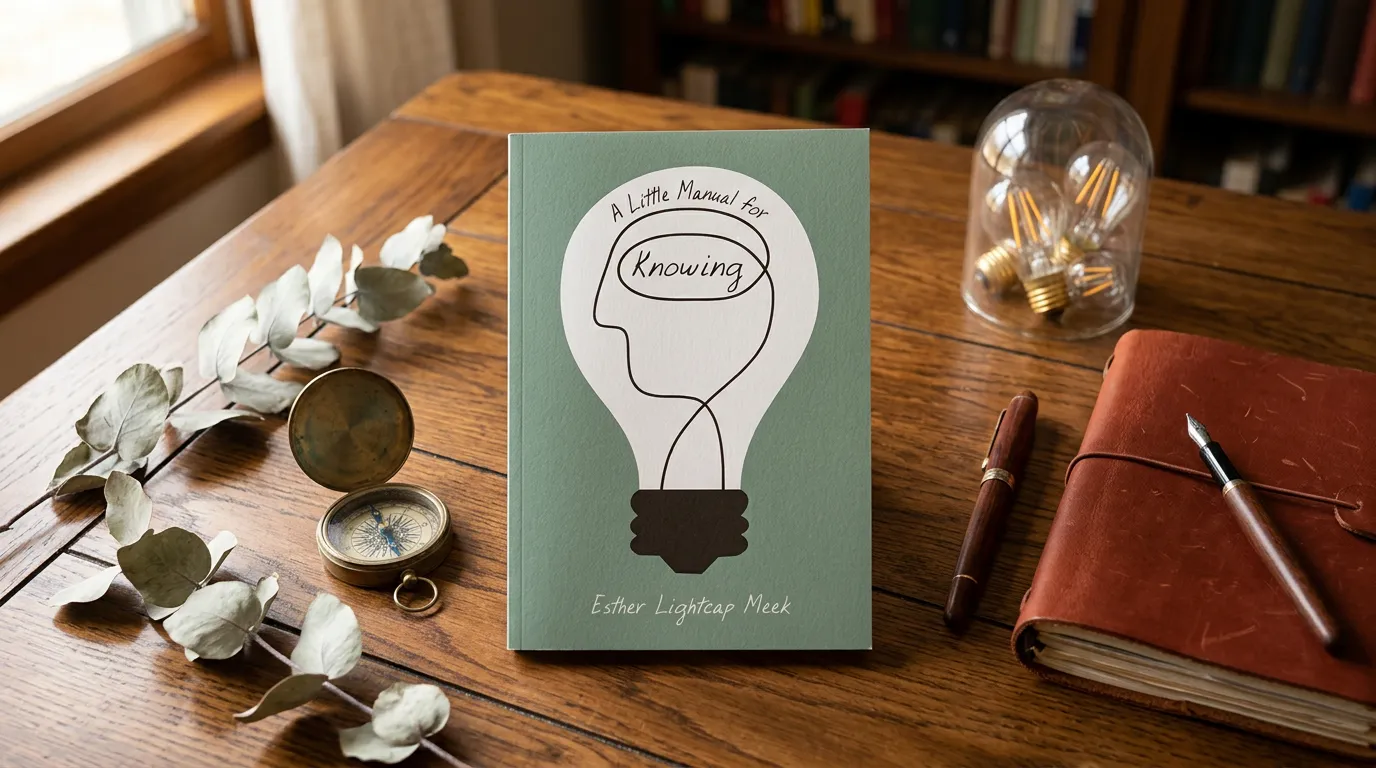
If eternal life is knowing the only true God and the Son, then what does it mean to know? The question led to a book recommendation made by Makoto Fujimura, an acclaimed artist, writer, and speaker. The book is A Little Manual for Knowing, by Esther Lightcap Meek.

This exploration began with Jesus's prayer in John 17, particularly verse three:
If eternal life is knowing the only true God and the Son, then what does it mean to know? The question led to a book recommendation made by Makoto Fujimura, an acclaimed artist, writer, and speaker. The book is A Little Manual for Knowing, by Esther Lightcap Meek.
What does it mean to know? To many, this seems like a silly question. Which is why we need to ask it.
At just 100 pages long, A Little Manual for Knowing is a condensed presentation of Dr. Meek's work. Condensed doesn't mean reduced. The book moves quickly through many of her major themes. For those who will benefit from more words, examples, and descriptions, larger books, like Longing to Know and Loving to Know, will serve that need.
The book's introduction lays out a vision for why we need to revisit our knowing. We have been raised in a culture that treats knowing as the accumulation of data. Dr. Meek wants to convince you that "knowing is a pilgrimage and a gift."
The opening chapter focuses on love. What does love have to do with knowing? The author argues that "we love in order to know." She shares a definition of love attributed to Pope John Paul II: Love is the gift of self. To know well, we must give ourselves to the process, and to the subject we are coming to know.
Chapter 2 is about Pledge. Pledge is covenant. It's the "I do" of love. The pledge is to allow ourselves to be changed by what we know. These aren't just facts we are learning; they represent reality, and wise people adjust to what is real. The commitment comes before the knowing.
Chapter 3 is on Invitation and welcome. As lovers and knowers, we invite, we welcome, the not-yet-known. We are hospitable. We are humble, patient, and attentive.
Chapter 4 deals with Indwelling. In this chapter, Dr. Meek introduces the idea of Subsidiary-Focal Integration (SFI). This is a framework originally developed by the scientist-turned-philosopher Michael Polanyi. The general idea is that we focus on skills to get better at them, and those skills become embodied, or subsidiary to another focal (performance). We can focus on subsidiaries for practice, but not for regular use. When performing on the piano, it's not helpful to think about scales or finger placement. The same goes for riding a bike, playing golf, and driving a car.
There is a lot to SFI and Indwelling, but let's move on to Part II and Chapter 5. This chapter is about Encounter. The knowing pilgrimage occasionally arrives at Aha! moments. Epiphanies. It is like Reality is offering itself to be known. It seems like grace. These Aha! events become clues pointing to another epiphany down the road, Indeterminate Future Manifestations (IFMs).
Chapter 6 is about Transformation. Our knowing and our participation in reality are changed. Dr. Meek writes, "Education is not information impersonally collected and regurgitated; it is transformative re-formation as knowers covenanted joyously to engage the world in a stewardly way."
Chapter 7 is entitled Dance. Dance! The knower and the known are mutually inviting and welcoming. There is a rhythm and artistry to knowing. It's asymmetric, in the way that love is. A gift (of the self) isn't given in exchange for something in return. The author says, "The goal of knowing is not complete information; it is communion."
The final chapter is called Shalom. Our knowing is for shalom. Knowing is no longer about performance, control, outcomes, success, power, wealth, and consumption. Instead, our knowing is for resolution, healing, relationship, joy, peace, and better outcomes. We have been told that "Knowledge is power." The point of knowledge is to eliminate wonder and mystery. To control the world. But good knowing is about discovery. It amplifies wonder and mystery. It loves the world.