
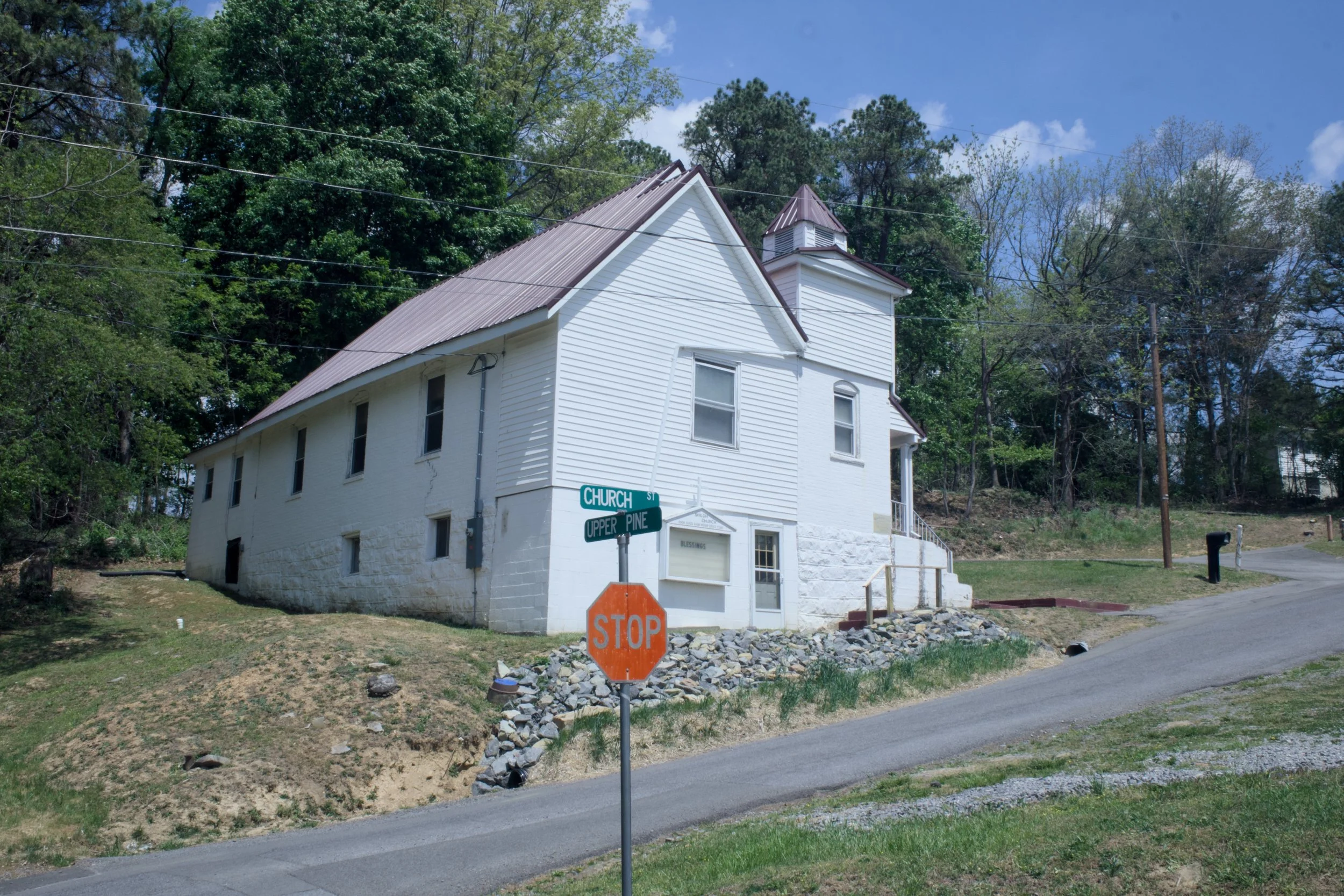


Across Church Street
God’s dwelling place
Get outside the bubble, yes. But don’t neglect the bubble. Care for it.
“Is it time for you to live in your paneled houses while this house lies in ruins? Now this is what the Lord of Armies says. Consider your ways carefully. You sow much seed but you harvest little. You eat but you are never satisfied. You drink but you never become drunk. You get dressed, but no one is warm. The one who makes money puts that money into a bag with a hole in it. This is what the Lord of Armies says. Consider your ways carefully. Go up to the mountains, bring lumber down, and build the House. I will be pleased with it, and I will be glorified, says the Lord. You expected much, but look, there was little. When you brought it home, I blew it away. Why did I do that? This is a declaration of the Lord of Armies. It is because my house lies in ruins while each of you is busy with your own house. So it is because of you that the heavens have withheld the dew and the earth has withheld its produce. I called for a drought on the land, on the mountains, on the grain, on the new wine, on the olive oil, on everything which the soil produces, on people, on livestock, and on all the labor of your hands.”
For decades Christians have been told to get outside of the bubble—that our ministry lies beyond the church walls. It’s an important message, but something’s been lost: the health of the Church—Christ’s Body and God’s Dwelling Place. In our preoccupation with our own lives and our zeal to solve the world’s problems, we’ve left God’s House to deteriorate. Is it surprising that our efforts seem so fruitless? And we’re tired. Now is the time to work on God’s House—the Church—even as we continue to engage the world.
“So then, you are no longer foreigners and strangers, but you are fellow citizens with the saints and members of God’s household. You have been built on the foundation of the apostles and prophets, with Christ Jesus himself as the Cornerstone. In him the whole building is joined together and grows into a holy temple in the Lord. In him you too are being built together into a dwelling place for God by the Spirit.”
A Thousand Little Things
The way of Kingdom influence is by a thousand little things. A multitude of intentional drips foster real change.
This summer our church has been emphasizing ‘A Thousand Little Things’. It’s been a chance to dwell on the many ways Christians can engage the world, offering Kingdom life drip-by-drip. A series of nine videos was used to illustrate. Scripts from those videos can be found here.
Cultural Literacy and Fluency
Our two goals as Jesus followers are to become more fluent in Kingdom culture, while becoming more discerning of world culture.
In our more interconnected world, cultural literacy is a valuable asset. Cultural literacy is an awareness of cultural differences—an awareness that hopefully leads to more understanding, better collaboration, and greater influence. Cultural literacy is essential in areas like healthcare, education, and business.
Since cultural literacy is knowing about other cultures, a person can grow in culturally literacy from outside a culture. But to be fluent in a culture, that person must move inside. Cultural fluency is about becoming part of a culture in such a way that the culture no longer seems foreign or strange. It’s assimilation; adaptation to the deepest levels.
““The measure of Christian discipleship is Kingdom cultural fluency.”
This is a good metaphor for Christian discipleship. When we commit to follow Jesus—to be governed by him—we are transferred from the world’s system into his kingdom. We are adopted into his family. We become participants in a new culture. The measure of Christian discipleship is Kingdom cultural fluency. What is God’s kingdom like? Who am I? How am I supposed to live? How successfully am I living this way? How normal are the ways of the Kingdom becoming to me?
But as Kingdom citizens, we’re also left in the world’s system to represent Kingdom culture here. We’re called ambassadors. And to do that well, we must maintain a cultural literacy of the world’s system. What is the world like? What drives people? What are their (and our) struggles, needs, and passions?
The essential thing for Christians is that we know the difference between literacy and fluency—and that we are firmly convinced of which culture we’re to become fluent and of which one we’re to remain literate.
- love
- friendship
- beauty
- thankful
- attunement
- communion
- discipline
- video
- hope
- hania rani
- holiness
- serving
- seth godin
- dean sherman
- across
- covenant
- music
- eternal life
- justice
- embodiment
- wonder
- gracious
- hesed
- welcome
- poetry
- rest
- image
- brokenness
- disruption
- invitation
- companion mode
- resonance
- steadfast
- observer mode
- framework
- pastoral
- oneness
- caritas
- difference
- shalom
- john stott
- worship
- status
- care
I practice the spiritual discipline of rescuing earthworms on paved surfaces. It's a reminder to me that I can pause what I'm doing, get a little dirty, and help. Also, that I've been given the responsibility to care.